
It’s so hard to judge a book. Sometimes a book only clicks when you’re ready for it.
Sometimes you enter a phase in your life that makes you feel lost, and the wisdom of a book turns out to be the perfect map that leads you through it.
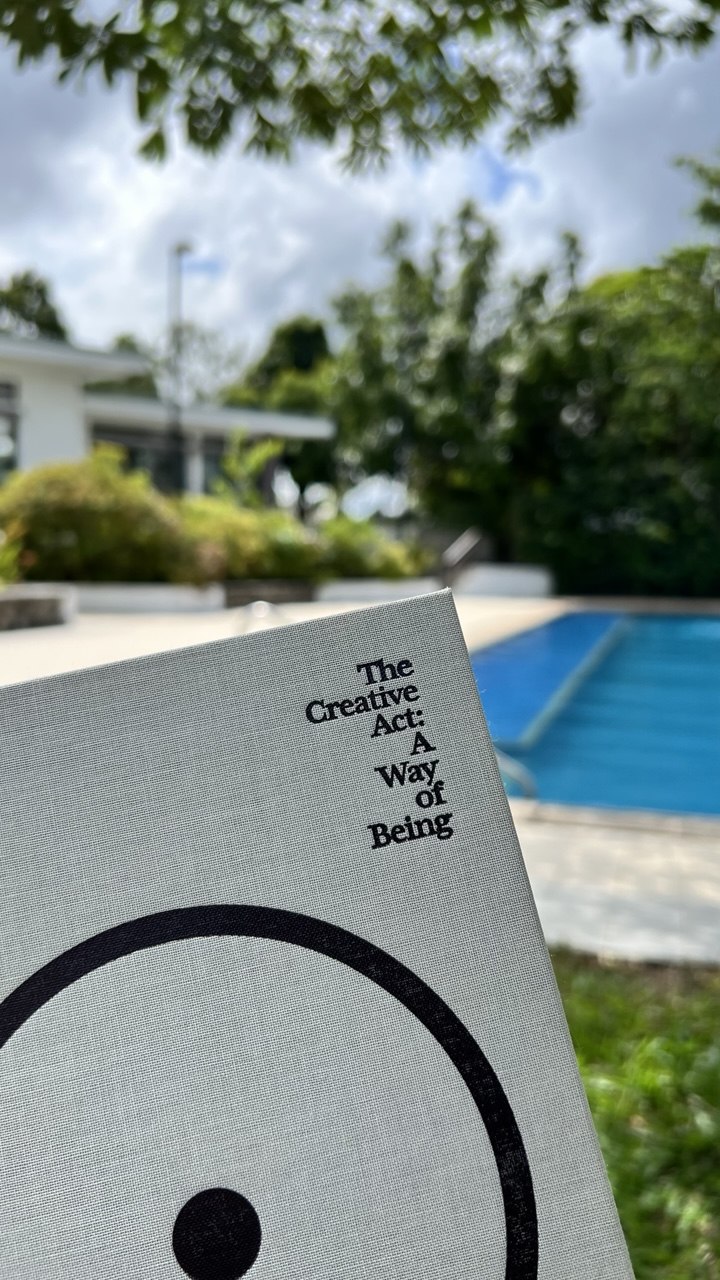
I actually read this one a year ago, when it came out. What’s crazy is that the same pages hit so much harder now.
Not because the writing changed, but because of where I am in my own life this time around.
That’s what Rick Rubin’s The Creative Act was for me.
After almost a year of not making any content, I recently decided to start again. And I hit a wall almost immediately.
That’s the phase I picked it back up in.
I have a graveyard.
Half-built products. Drafts that never got a title. A channel idea I rewrote so many times it never went up. Features I polished for a week that nobody ever asked for.
If you saw the folder, you’d think I was lazy. I’m not lazy. I ship constantly.
And this isn’t a recent slump. Some of these projects go back ten years. The graveyard has been filling up, quietly, for most of my creative life.
The graveyard isn’t full of things I didn’t finish because I ran out of time. It’s full of things I didn’t finish because finishing meant someone could finally look at them and decide.
For years I called that perfectionism. High standards. “I just want it to be good before it goes out.” I said it like it was a virtue.
It took reading The Creative Act to see it plainly for what it was: fear wearing a nicer outfit.
Here are the ideas from the book that finally got me shipping again, and how each one pried a little more fear loose.
Separate the 4 Phases of Creation
Key Idea: every project moves through four phases, and most things stall because you’re working in the wrong one.
Then Rubin gave me the diagnosis for why. He breaks a project into four phases, and getting them confused is usually why things stall.
- Seeds: you collect ideas, notes, fragments, without deciding if any are good. You’re a collector, not an editor.
- Experimentation: you play with those seeds, test weird combinations, run tiny experiments without caring how they turn out.
- Craft: the manual labor of actually building the thing.
- Finishing: the polish, and the letting go.
The mistake that wrecked me for years? I was doing Craft and Finishing during Seeds.
The clearest example: I’d sit down to brainstorm, and right there in the middle of gathering, I’d start judging every idea as it came. Killing off the “bad” ones on the spot.
I was applying the filter in the exact phase where I should’ve just been opening my mind and collecting. No rules, no editing, just catching whatever showed up.
That’s the whole lesson. Gathering and filtering have to be separate steps. You can’t do both at once.
When you judge a seed like it’s already a finished thing, you kill it before it ever gets a chance to grow into anything.
Then you wonder why you never have good ideas. You had plenty. You just handled them in the wrong phase.
So now, when I feel stuck, I ask one thing: what phase am I really in, and what phase am I acting like I’m in?
Most of the time, I’m trying to finish something I haven’t even started playing with yet.
It’s Just a Snapshot, Not a Scorecard
Key Idea: what you make is a record of who you were on the day you made it. It is not a scorecard for your worth as a person.
Psychologists have a name for the trap on the other side of this. They call it contingent self-worth, where your sense of value rises and falls with your latest result. Ship something good, you’re a genius. Ship something flat, you’re a fraud. Your whole self hangs on the last thing you made.
I lived in that loop for years without noticing. A post did well and I felt untouchable for a day. The next one flopped and I quietly wondered if I’d lost it. Same person, same skills, forty-eight hours apart. The only thing that changed was a number.
Rubin’s reframe breaks the loop. A project isn’t a test you pass or fail. It’s a snapshot.
Of course something I made two years ago looks rough now. I’ve grown since then. That’s a good sign, not a bad one.
Nobody looks at an old photo of themselves and thinks it’s the final word on their face. It’s just where you were standing back then. Your work is the same. It captures a moment, not a verdict.
Once It’s Done, Your Relationship With It Is Over
Key Idea: the moment you publish something, let it go. Stop gripping it, stop tracking what people say about it, and turn to the next thing.
Once a piece is out, it stops being yours. Your job was the making, and the making is done.
Holding on after that doesn’t help the work. It just keeps you tethered to something you’ve already finished, refreshing to see who liked it, bracing for who didn’t.
That grip is what blocks the next idea from coming. You can’t reach for what’s next while both hands are still wrapped around what’s already out the door.
So Rubin’s idea is to treat publishing as the goodbye. You put it out, you let it be what it is, and you move on before the reactions even land.
Make the Next Step Too Small to Fail
Key Idea: shrink the goal until it’s so small that fear has nothing to grab onto.
When a whole project feels too big to face, I don’t try to force my way through the fear. I make the next step tiny instead.
Not “finish the post.” Just “write one ugly first line.” Not “ship the feature.” Just “make the button show up on screen.”
Fear needs stakes to work. It feeds on “this has to be good, this has to land, people are going to see this.”
But there are no stakes in writing one bad sentence you can delete in ten seconds. There’s nothing there to be afraid of.
I learned this from running, of all places. On the days I dreaded a run, I stopped telling myself to go do 5K. I just told myself to put my shoes on and step outside.
That’s it. That’s the whole goal. And if all I did was walk, that counted too.
But here’s the thing: once the shoes are on and I’m out the door, I almost always run. The hard part was never the running. It was the size of the thing I was asking myself to start.
Creative work is the same. You take one small step, and then, almost always, the next one feels a little easier. Momentum does the rest.
Create for Yourself First
Key Idea: make the thing that makes you lean in, and let go of how people react to it.
The other trap is harder to admit, because I run content for a living. It’s making things for the reaction instead of for myself.
The moment I start building for an audience, an algorithm, or a trend, the work goes thin.
Rubin’s answer: follow your own genuine curiosity. Make the thing that makes you lean in, and trust that if you find it compelling, the people who think like you will too.
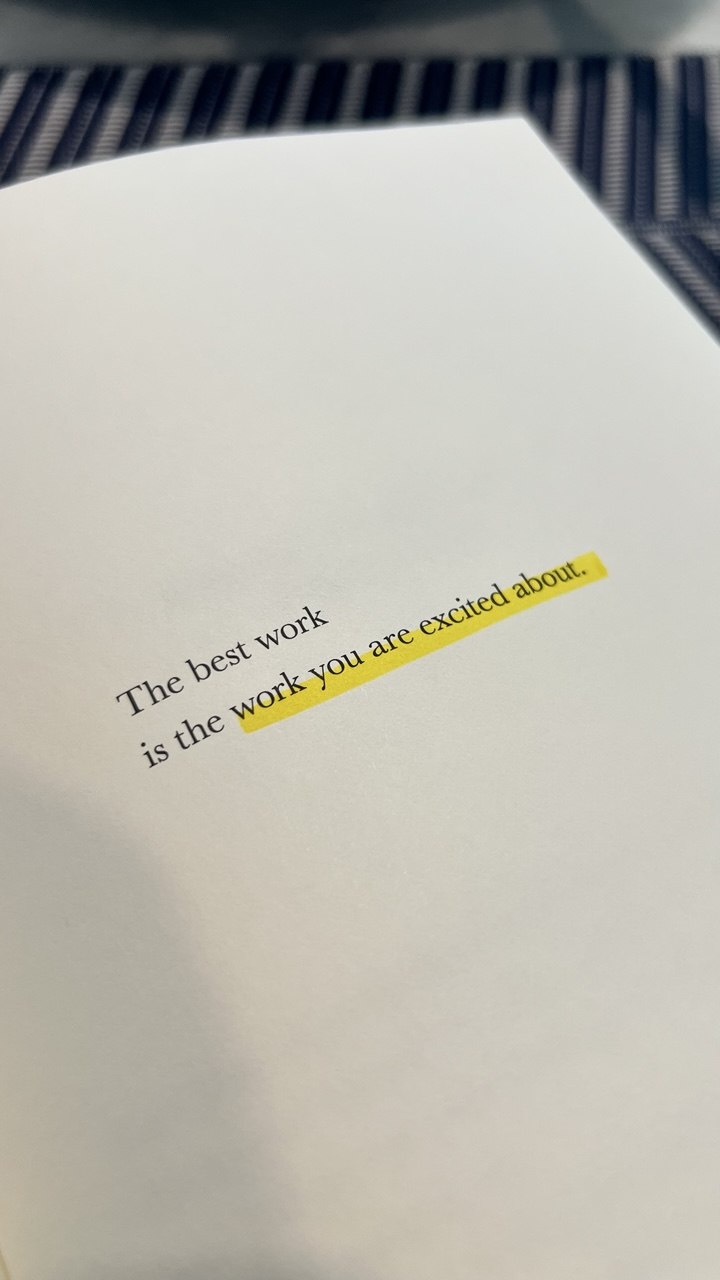
That’s not a marketing strategy. It’s the only version of the work that’s actually yours.
And it’s the antidote to perfectionism, which is really just an attempt to control the reaction in advance. You’re polishing and polishing because some part of you believes that if you get it perfect enough, you can guarantee how people respond.
You can’t. You were never going to. When the work is made for you first, their reaction stops being the point.
What changed
Here’s the part that matters. Otherwise this is just me talking about my feelings.
I started shipping things before I thought they were ready. On purpose. Rough, honest, a little exposed.
And the sky didn’t fall. Some of them did nothing.
A few connected with people in a way the “perfect” version never would have. Precisely because they were unguarded.
The work I was most scared to release turned out to be the work that resonated most. And I’d been sitting on it, out of fear that it wasn’t good enough.
The graveyard is still there. But I add to it a lot less now, because I finally understand what was putting things in it.
It was never that the work wasn’t ready. It was that I wasn’t ready to be seen.
If you’ve got a graveyard of your own, the move isn’t to make the work better. It’s to figure out what phase you’re actually in.
Make the thing for yourself. Let it be a record of who you are right now.
And ship it, so there’s room for whoever you’re about to become.